The Line Item That Wasn’t Supposed to Exist
The original $38,000 estimate had a contingency. We had even spent money on professional asbestos testing of the old vinyl flooring weeks before demo day. The report came back clean. Negative. We celebrated with takeout and a false sense of security.
Then we pulled up the vinyl.
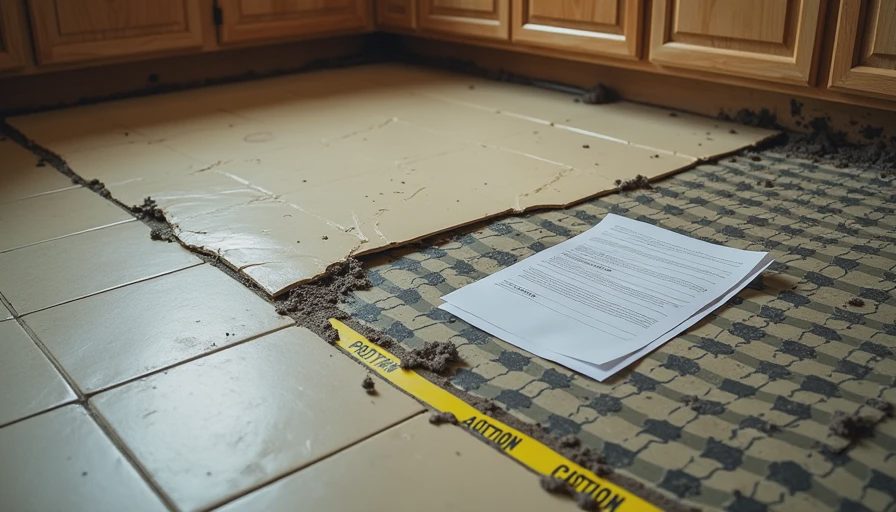
Underneath, in the middle of the kitchen floor and extending under where the peninsula had stood, was a second layer: 9x9 tiles, classic black-and-cream pattern, the exact size and style that makes every renovation forum light up with the same warning. We stopped. Took photos. Called the testing company back. The new sample came back positive for chrysotile asbestos in the black mastic.
This is the full accounting of Demo Surprise #1—the $2,800 we did not budget for, how the number was built, and what it taught us about contingencies that look good on paper until the floor talks back.
How We Found It
Demo day had already run long. The cabinets were gone. The vinyl was coming up in uneven sheets. In one section near the old sink location the vinyl tore cleanly and revealed the older tile beneath. The pattern was unmistakable once you knew what to look for. We put the tools down, sealed the area with plastic, and walked outside to make the call.
The testing company sent a technician the next morning. Two samples. Rush results. Forty-eight hours later the email arrived with the word we had hoped not to see.
We had two choices: encapsulate or abate. Encapsulation would have meant leaving the tile in place and covering it with new underlayment and flooring—cheaper, faster, but a permanent asterisk on the house. We chose full removal. The kitchen was already gutted. The dumpster was still in the driveway. Doing it halfway felt like the kind of decision future-us would curse while trying to sell the house.
The $2,800 Breakdown
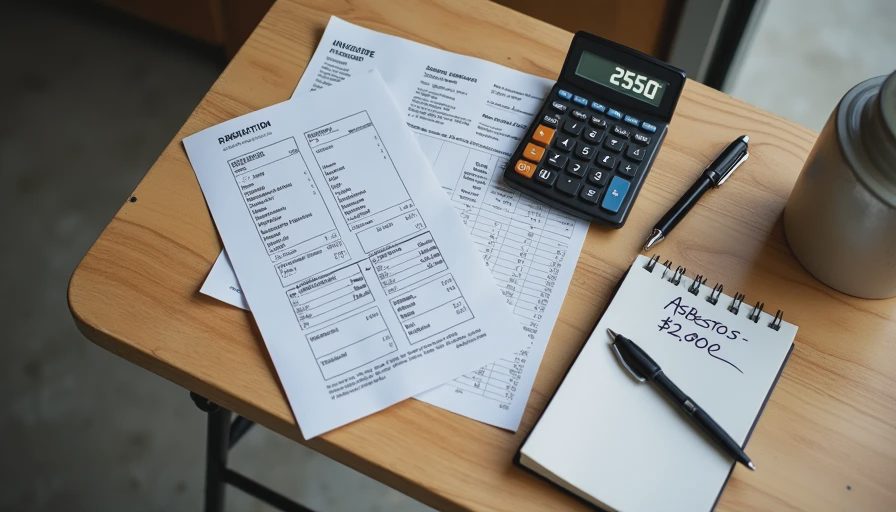
Here is exactly where the money went. Every number is from the final invoices and the public Google Sheet.
Additional testing and air monitoring: $380
Licensed asbestos abatement crew (one full day, containment, negative-air machines, removal of tile and mastic): $1,650
Special waste disposal fees and manifest paperwork: $420
Replacement underlayment and extra floor prep materials after the abatement: $210
Lost labor day (we could not work in the space while the crew was there) and the extra dumpster pull that followed: $140
Total: $2,800 on the nose.
No drama markup. No “while we’re here” upsells. Just the actual cost of doing the job correctly in Salt Lake City in 2026.
What the Contingency Was Supposed to Cover
The original budget had $1,000 specifically earmarked under Phase 1 for “whatever is under the subfloor.” We had already used part of that for soft spots and the extra scraper. The asbestos cost blew past the remaining contingency and dipped into the overall 12 % buffer we had built for the whole project.
In the spreadsheet it now sits as its own highlighted line:
Demo Surprise #1 – Asbestos tile abatement – $2,800 – Unbudgeted
We did not hide it. We did not fold it into “miscellaneous.” The whole point of the public sheet is that the ugly numbers stay visible.
The Decision Process (No Romance)
We sat at the folding table in the garage that night with the printed report and the abatement quotes. Megan asked the only question that mattered: “If we leave it, will we regret it every time someone mentions the floor?”
Yes.
We would.
So we wrote the check. The crew came, built the plastic containment, ran the negative-air machines, and removed every tile and every bit of mastic they could reach. When they finished, the subfloor was bare, clean, and ready for new underlayment. The air tests cleared. We put the multi-tool back to work the next day.
What This Did to the Running Total
Before the surprise the project was tracking almost exactly on the $38,000 estimate. After the $2,800 hit we were effectively starting the next phases $2,800 in the hole relative to the original plan. That number will either be absorbed by later savings or will push the final total higher. Either way, it is already recorded.
The sheet now has a new running note at the top:
“Contingency is not a theory. It is a prediction that something will go wrong. Something went wrong.”
Lessons Already Logged
Clean vinyl does not guarantee a clean history underneath. Older houses often have multiple floor layers.
Rush testing is worth the premium when the dumpster is already on site.
Full abatement costs real money. Budget for the possibility even if the first test is negative.
Write the ugly line item the same day. Waiting only makes it easier to rationalize later.
We are still on track to finish. The temporary kitchen is functioning. The kids think the plastic containment walls were the most exciting part of the whole project. The spreadsheet is less optimistic than it was two weeks ago, but it is more honest.
Measure twice, cook once.
And when the floor reveals a second floor, open the contingency column and start typing.