The first time I spilled red wine in our 1994 kitchen, I reacted like the house was on fire. Megan had just set down a glass near the almond-colored counter, Charlie bumped the cutting board, and suddenly there was a burgundy river heading toward the grout. I learned that how to remove red wine stains is mostly about moving quickly and resisting dramatic experiments. Blot first, identify the surface, and use the mildest cleaner that can do the job.
Our kitchen is a renovation test zone, so I have had opportunities to practice on laminate, painted cabinets, cotton napkins, a wool-blend rug, and one unfortunate upholstered dining chair. Some stains disappeared completely. Others became permanent reminders to use coasters. Here is the process I wish I had written down before grabbing a bottle of bleach.
Start with the spill, not the stain
Fresh wine is easier to handle than a dried mark. Pick up any solid debris, then press a clean white cloth or several paper towels onto the liquid. Do not scrub. Scrubbing spreads the pigment sideways and pushes it deeper into fabric, wood grain, grout, or a porous countertop. Replace the towel as it becomes pink, and keep blotting until very little transfers.
If the spill is on a hard surface, wipe around the outside edge first, then work toward the center. That keeps the puddle from expanding. A small bowl of cool water and a teaspoon of dish soap is a useful first pass for sealed laminate, finished tile, and many painted surfaces. Use a damp cloth rather than pouring water directly onto the area, especially near cabinet seams or an appliance.
Before applying anything stronger, check the material. A sealed quartz counter is not treated like unfinished butcher block, and a cotton shirt is not treated like a wool rug. Test a cleaner on a hidden spot. This thirty-second check saved the finish on our pantry door when a supposedly universal spray left a dull patch on the sample area.
How to remove red wine stains from clothing and washable fabric
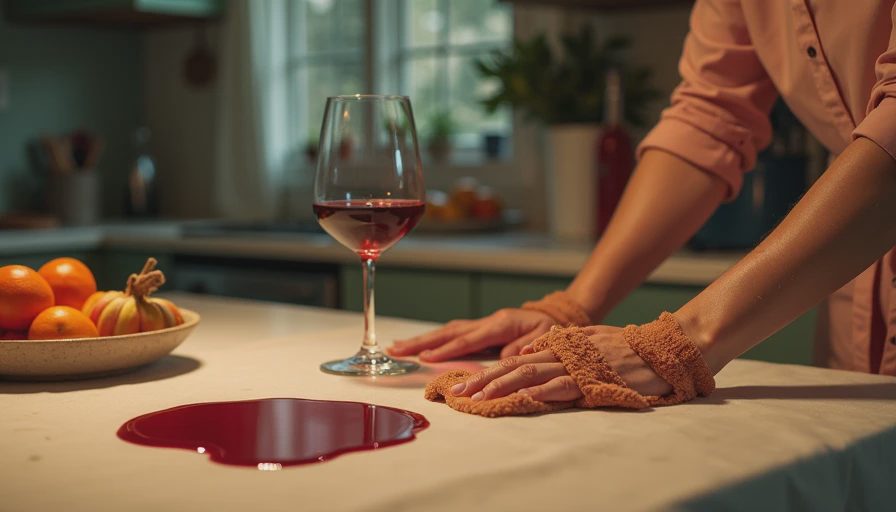
For a washable shirt, napkin, or tablecloth, flush the back of the stain with cold running water if the care label allows it. Pushing water from behind helps drive wine out instead of through the fibers. Apply liquid laundry detergent or a small amount of dish soap, gently work it into the mark with your fingertips, and let it sit for about five to ten minutes.
Wash according to the care label using the warmest safe setting, but do not put the item in the dryer until the stain is gone. Dryer heat can set the remaining color and turn a temporary problem into a permanent one. Inspect the fabric in daylight. If a shadow remains, repeat the treatment or use a color-safe oxygen bleach product approved for that fabric.
For how to remove red wine stains from a white cotton item, oxygen bleach is usually a better choice than chlorine bleach. Follow the package dilution and soaking time. Chlorine bleach can yellow some fabrics, weaken fibers, and react badly with other cleaners. Never mix bleach with vinegar, ammonia, or an unknown bathroom product.
Silk, wool, rayon, and dry-clean-only garments deserve a professional cleaner rather than a kitchen chemistry project. Blot, do not rub, and tell the cleaner what caused the mark. I once spent ten minutes working at a wool scarf before realizing I was roughing up the fibers faster than I was removing wine.
Countertops, cabinets, and grout need different treatment
For how to remove red wine stains from a sealed countertop, start with warm water and a few drops of dish soap. If the mark remains on quartz, ceramic tile, or sealed laminate, try a paste made from baking soda and a little water. Spread it over the spot for five minutes, wipe gently with a soft cloth, and rinse. Baking soda is mildly abrasive, so do not grind it into a glossy finish.
Natural stone requires more caution. Marble, limestone, and some concrete surfaces can etch when exposed to acids, including vinegar and lemon juice. Skip those ingredients. Blot the spill, use a pH-neutral stone cleaner, and avoid abrasive powder. A dark mark that has soaked into unsealed stone may need a poultice or a stone-restoration professional rather than repeated household scrubbing.
Painted cabinets are another place where enthusiasm causes damage. Use a barely damp microfiber cloth with diluted dish soap, then dry the area immediately. Do not use a magic eraser aggressively on satin or matte paint; it can remove sheen along with the stain. For grout, a soft toothbrush and diluted oxygen-bleach solution can help, but test first because colored grout can fade.
Our actual cost for the supplies was less than $12: dish soap, white microfiber cloths, baking soda, and a small oxygen-bleach tub. The expensive lesson was the cabinet touch-up paint I needed after attacking a wine mark with a rough sponge.
Rugs, upholstery, and carpet
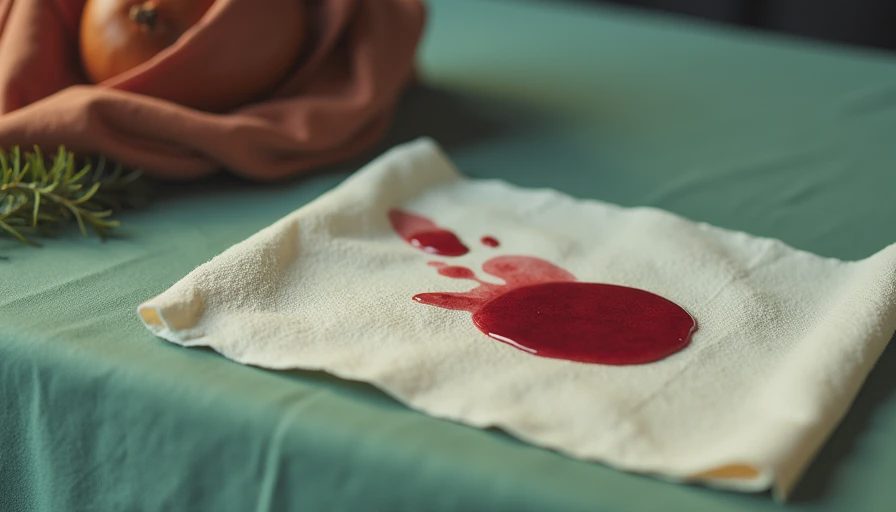
On a rug or upholstered chair, blot from the outside toward the center with a white towel. Mix two cups of cool water with one tablespoon of dish soap. Dab the solution onto the stain, wait a minute, and blot again with a dry towel. Repeat in small passes instead of soaking the entire cushion or rug. Excess water can leave a ring, encourage odor, or reach the chair frame.
For how to remove red wine stains from carpet, some people reach immediately for salt. Salt can absorb a little surface moisture, but it is not a complete cleaning method. Vacuum dried salt after it has done its limited work, then use the soap-and-water approach. Hydrogen peroxide can lighten certain fibers and dyes, so only consider a color-safe product after a hidden-area test and careful label reading.
Wool, silk, antique rugs, and expensive upholstery are worth taking to a professional. The same goes for a stain that reaches deep into padding. A $75 cleaning visit is frustrating, but it is cheaper than replacing a $600 rug because a home remedy stripped its color. Keep fans moving air across a damp area, and avoid heat until the fabric is fully dry.
Dried stains and the mistakes that make them worse
Dried wine takes patience. First vacuum or brush away loose residue, then dampen the spot lightly with cool water. Apply a suitable detergent solution, wait several minutes, and blot. You may need three or four rounds. Do not stack multiple cleaners on top of one another. If vinegar, bleach, peroxide, and ammonia meet on the same surface, the result can be hazardous fumes or damaged material.
Another common mistake is using hot water immediately. Heat can set protein-based stains and may make some dyes harder to remove. Red wine is not primarily a protein stain, but cold water is still the safer starting point for unknown fabrics. Also avoid colored towels, which can transfer dye while you are trying to solve the original problem.
When asking how to remove red wine stains from an older mark, set a reasonable finish line. If the spot is lighter, not spreading, and the fiber or finish is being protected, stop before cleaning creates a larger visible patch. A professional can often do more with extraction equipment than another hour of household scrubbing.
My five-minute spill kit
I keep white microfiber cloths, plain dish soap, a small spray bottle, a soft toothbrush, baking soda, and color-safe oxygen bleach in a labeled bin under the sink. The spray bottle contains water only, so there is no mystery mixture waiting to react with a different cleaner. I also keep the care instructions for our rug in the renovation notebook.
The workflow is simple: contain the spill, blot until transfer slows, test the cleaner, treat in short passes, rinse or wipe away residue, and dry with airflow. Take a quick photo before starting if the item is valuable. It helps you compare progress instead of relying on memory, which gets surprisingly optimistic after a glass of wine.
The useful answer to how to remove red wine stains is not a miracle ingredient. It is a controlled process matched to the surface. Measure twice, cook once, and apparently place the wine farther from the cutting board. If you act quickly and skip the aggressive shortcuts, most ordinary kitchen spills become a cleanup task rather than a renovation line item.