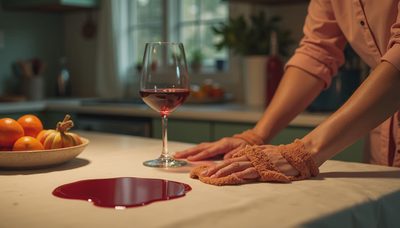
The red wine landed on our light grout during a Friday dinner, naturally, three minutes before guests arrived. I had just finished sealing the backsplash, and my first reaction was to grab a wet towel and scrub like I was erasing a parking ticket. That made the mess larger. Learning how to remove wine stains is mostly about speed, restraint, and using the right treatment for the surface in front of you.
The basic sequence is simple: blot, dilute, treat, rinse, and dry. Do not rub fresh wine into fabric, and do not pour every cleaning product under the sink onto the spot. Wine contains pigment and acid, while porous materials can pull liquid below the visible surface. The fix depends less on having a miracle cleaner and more on stopping the stain from spreading.
Start with the spill, not the cleaner
Before thinking about how to remove wine stains, remove anything sitting on top of the spill. Use a clean white cloth or several layers of plain paper towel. Press straight down, lift, and move to a dry section of cloth. Repeat until the towel is picking up very little color. A white cloth lets you see whether you are transferring wine or simply pushing it around.
For a tablecloth or shirt, place a towel behind the stained area so the liquid does not soak through to another layer. On carpet, work from the outside edge toward the center. That keeps the wet area from turning into a much larger pink halo. If the spill is still wet, cool water is usually the safest first rinse for washable fabric. Pour a small amount through the back of the stain, then blot from the front.
Avoid hot water at the beginning, especially on protein-based materials such as wool or silk. Heat can set some stains and damage delicate fibers. Salt is another popular emergency trick, but it is not a complete cleaning method. It can absorb surface moisture while the pigment remains underneath.

How to remove wine stains from clothing and linens
For cotton napkins, washable shirts, and tablecloths, rinse with cool water as soon as possible. Apply a small amount of liquid laundry detergent or a prewash stain remover to the spot. Gently work it into the fabric with your fingers, then let it sit for about 10 to 15 minutes. Wash according to the care label using the warmest safe setting, but do not put the item in the dryer yet.
The dryer is where a nearly solved problem becomes a permanent souvenir. Check the fabric in bright light after washing. If a pink or purple shadow remains, repeat the treatment before drying. Oxygen bleach, such as OxiClean Versatile Stain Remover, can help on many colorfast washable fabrics when mixed and used according to its label. Test an inside seam first. Never combine oxygen bleach with chlorine bleach, ammonia, vinegar, or other cleaners.
White cotton is more forgiving, but do not assume every white textile can handle chlorine bleach. Spandex, wool, silk, and fabric with special finishes can discolor or weaken. For an expensive garment, blot thoroughly and take it to a cleaner rather than experimenting with three internet remedies at once.
Treating rugs, upholstery, and carpet
Rugs and furniture need a lower-water approach because padding and foam can stay damp for a long time. After blotting, mix a small amount of mild dish soap into cool water. Dampen a white cloth with the solution, wring it nearly dry, and dab the stain. Follow with a second cloth dampened with plain water to remove soap residue. Finish by pressing dry towels over the area with a heavy book on top for a few minutes.
For a wool rug, silk upholstery, or a carpet with a manufacturer-specific cleaning requirement, stop after blotting and check the care instructions. Water rings and dye bleeding can cost more to fix than the original spill. On synthetic carpet, a carpet stain remover labeled for red wine can be useful, but follow the dwell time exactly. More product does not equal more cleaning; excess residue attracts dirt and leaves a stiff patch.
If the wine reached the carpet pad, the surface may look clean while the odor returns as moisture moves upward. That is the point to call a professional cleaner, particularly when the rug is large, valuable, or glued to flooring. Tell them what products you already used. A complete cleaning history is more helpful than pretending the mystery foam never happened.
How to remove wine stains from countertops and grout
Nonporous quartz, sealed granite, porcelain, and laminate usually respond well to prompt blotting followed by warm water and a little dish soap. Wipe the area, rinse with clean water, and dry it. Do not use an abrasive powder or rough scrub pad on quartz or a glossy countertop; dull spots are a separate repair problem.
Natural stone deserves more caution. Granite and marble can resist staining when properly sealed, but wine can still sit in a small unsealed area or along a seam. Avoid vinegar, lemon juice, and other acids because they can etch calcium-based stone such as marble, limestone, and travertine. If a dark mark remains after cleaning, a stone-safe poultice may draw out the discoloration, but this is one case where reading the product instructions matters more than improvising.
Grout is porous and often holds the color after the tile looks clean. Use a soft nylon brush with a paste made from baking soda and water, then rinse carefully. For stubborn marks, use a grout cleaner that is compatible with your tile and grout sealer. Test a hidden section first, especially with colored grout. Our backsplash stain turned out to be less dramatic after it dried, but the grout still needed two gentle passes.
Mistakes that make the stain worse
The most common mistake is scrubbing immediately. Friction drives the pigment sideways and deeper into cloth, carpet, and grout. The second is using too much water on upholstery or a rug. The third is applying hydrogen peroxide, bleach, or a strong all-purpose cleaner without testing. These products can remove color from the material along with the wine.
Another mistake is mixing cleaners. Never combine bleach with ammonia or acids, and keep cleaning products in their original labeled containers. Ventilate the room and wear gloves if the product label calls for them. If the area is large, the surface is valuable, or the care label says dry clean only, professional help is the sensible budget decision.
Do not judge the result while the material is soaked. Wet fibers often look darker, and a damp countertop can hide a remaining ring. Let the treated area dry naturally, away from direct high heat, then inspect it in daylight.
My five-minute kitchen response kit
After our backsplash incident, I made a small kit and stored it under the sink: white microfiber cloths, plain paper towels, mild dish soap, liquid laundry detergent, a soft nylon brush, a spray bottle for clean water, and a small oxygen-bleach product for compatible laundry. The kit cost roughly $20 because most of the items were already in the house. I did not buy a specialty red-wine gadget.
When a spill happens, I first move glasses and plates out of the way, then blot from the edge inward. Next, I identify the material before choosing a cleaner. Fabric gets a cool rinse; sealed counters get soap and water; stone and upholstery get a cautious test. I record unusual cleaning products in my renovation notebook because memory is unreliable when dinner is still happening.
That process is the practical answer to how to remove wine stains: act quickly, use less force, and match the treatment to the surface. For clothing, keep it out of the dryer until the color is gone. For rugs and upholstery, control moisture. For countertops, protect the finish. Measure twice, cook once, and keep the red wine at least one elbow away from the backsplash.