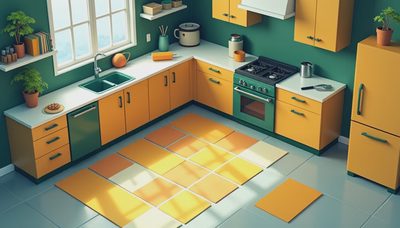
When we started planning our 180-square-foot kitchen remodel in Salt Lake City, ready to assemble kitchen cabinets looked like the obvious budget move. Our 1994 cabinets were almond-colored, swollen near the sink, and arranged around appliances that had outgrown the room. A full custom kitchen was never in our budget, but I also did not want a flimsy renovation that looked cheap six months later. So I treated the cabinet order like a product launch: requirements, measurements, cost tracking, and several uncomfortable retrospectives.
Our cabinet boxes, doors, fillers, toe kicks, and shipping totaled $6,184 before tax. That was less than the custom quotes we received, but it was not the whole project. Hardware, a new sink base, trim, fasteners, paint, and replacement parts pushed the cabinet-related total closer to $7,350. The savings were real. So was the work.
Why We Chose Ready to Assemble Kitchen Cabinets
The main appeal was control. Ready to assemble kitchen cabinets arrive as flat-packed components rather than fully built boxes. That usually lowers factory labor and shipping volume, which can create a meaningful price difference. In our case, the cabinet order was roughly $3,000 to $5,000 less than the semi-custom estimates we received for a similar layout.
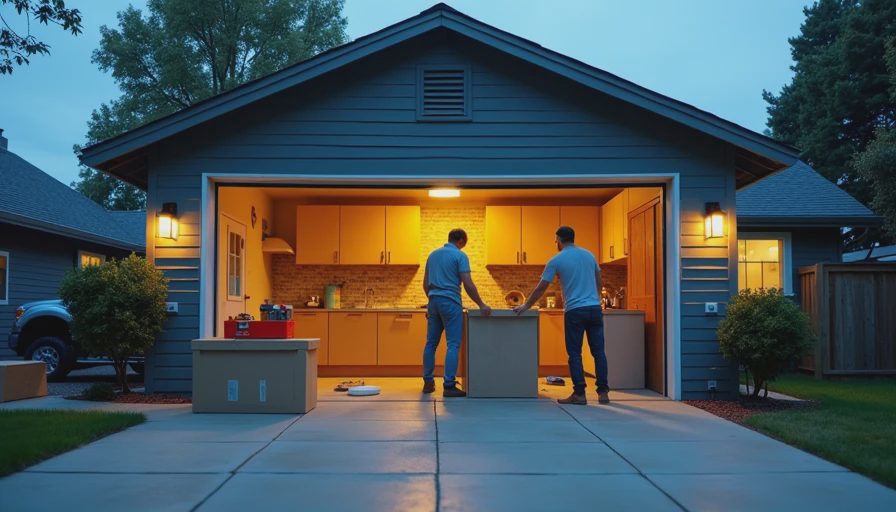
The tradeoff is that you become the assembly department. That means sorting panels, reading diagrams, driving dozens of screws, checking square, and finding somewhere to store large cardboard boxes. I assembled the first two wall cabinets on the garage floor and discovered that a slightly crooked back panel makes the doors look crooked later. The fix took 40 minutes. The lesson took about 10 seconds: check every box before moving on.
We compared online cabinet suppliers with local showrooms and looked at construction details instead of just door colors. Important questions included whether the cabinet sides were finished, how thick the shelves were, whether replacement doors were available, and whether the company sold matching fillers and toe kicks. A low base price loses its charm when a missing 3-inch filler delays the entire installation.
Our Cabinet Budget, Line by Line
Here is the part I wish more renovation articles showed. The ready to assemble kitchen cabinets themselves cost $6,184. Sales tax added about $500, and freight was $279. We spent $286 on drawer pulls and hinges, $173 on shims, screws, construction adhesive, and cabinet installation hardware, and $412 on matching trim and fillers.
The sink base was damaged when the shipment arrived. The carton looked fine, but one interior panel had a crushed corner. Customer service replaced it, although the delay cost us four days because that cabinet was central to the plumbing layout. We also bought a $94 cabinet jack and a $38 face-frame clamp. Neither tool was exciting, but both were cheaper than repeatedly holding a cabinet in place with one hand while trying to drive screws with the other.
Our complete kitchen budget eventually reached $18,940, including quartz counters, flooring, lighting, plumbing changes, and appliances. The cabinets were not the only major expense, but choosing this route kept the project below the $20,000 ceiling we had written on the first page of the spreadsheet.
What Assembly Actually Felt Like
Assembly took me six evenings, averaging two to three hours each, plus most of a Saturday. A professional crew could have moved faster, but I was learning while working. The process was repetitive rather than technically difficult. I laid out each part, confirmed the printed code, installed the cam locks or screws, checked the corners, and labeled the finished box with painter’s tape.
The wall cabinets were easiest because they had fewer drawers and no toe-kick adjustments. The base cabinets demanded more attention. Floors are rarely perfectly level, especially in an older suburban house, and a cabinet that looks square on the garage floor can twist when it meets an uneven wall. I used a 4-foot level, cedar shims, and a long straightedge to establish one consistent reference line.
The biggest mistake was assembling a drawer bank before confirming the plumbing location. The cabinet fit, but the drain would have landed directly against a drawer box. We caught it before installation, removed the drawer configuration, and ordered a narrower sink base. That change cost $118 and two weeks of annoyance. Measure twice, cook once is not decorative advice; it is a scheduling strategy.
Installation Mistakes We Would Avoid
Our first mistake was assuming the old wall was straight because the old cabinets were attached to it. It was not. The drywall bowed nearly half an inch across the sink wall. We installed a ledger board for the wall cabinets, shimmed carefully, and used longer screws where studs allowed. Without that preparation, the upper doors would have shown a visible staircase from left to right.
Our second mistake was rushing the order. I measured the opening for the refrigerator but forgot to account for the door swing and adjacent filler. The refrigerator technically fit, but the door could not open fully without scraping the neighboring cabinet. A $72 filler strip solved it, yet the error was entirely preventable.
Before ordering ready to assemble kitchen cabinets, make a wall-by-wall list that includes appliance openings, windows, outlets, plumbing, corner clearances, crown molding, fillers, and toe kicks. Then compare that list against the supplier’s component catalog. A pretty layout drawing is not enough if the parts required to build it are unavailable.

Are They Durable Enough for a Family Kitchen?
After a year of breakfast spills, soccer cleats, homework, and two children opening drawers with excessive enthusiasm, ours still look good. The painted doors have picked up a few small marks near the dishwasher, but the boxes remain square and the drawer slides have stayed smooth. Durability depends heavily on the specific construction, not simply on whether cabinets arrive flat-packed.
Look for full-extension drawer slides, adjustable hinges, sealed or finished cabinet interiors, and shelves that do not sag under cookware. We chose plywood-sided base cabinets for the sink and trash areas, while using a more economical material on several wall cabinet components. That was a deliberate compromise. The wettest, hardest-working areas received the stronger construction.
Ready to assemble kitchen cabinets are not automatically inferior, and they are not automatically a bargain. Some brands offer excellent value; others save money through thin backs, limited sizes, or expensive accessories. Read the specifications and order samples when possible. A door sample tells you about color and finish, but it does not tell you how the box handles a heavy cast-iron pan.
Our Practical Buying Checklist
Start with an accurate room drawing, including every measurement from the finished floor to the ceiling. Mark studs, windows, doors, vents, gas lines, water lines, and electrical outlets. Photograph the walls before demolition so hidden details do not disappear from memory.
Next, create a cabinet schedule. For every cabinet, record width, height, depth, door swing, drawer count, finish panel needs, and nearby appliance dimensions. Add at least one spare filler or trim piece if the supplier permits it. Small parts are inexpensive compared with another freight shipment.
Order early enough to inspect everything before installation day. Count cartons, open boxes carefully, and photograph damage immediately. Keep labels and packing slips until the kitchen is complete. We found that a simple spreadsheet column labeled “received, inspected, installed” prevented several parts from being forgotten.
Finally, budget 10% to 15% above the cabinet quote for hardware, shims, trim, tools, tax, freight, and mistakes. That is not pessimism; it is a realistic allowance for the parts the online configurator does not make obvious.
Would We Buy Them Again?
Yes, but I would simplify the design and allow more time. Ready to assemble kitchen cabinets saved enough money to pay for better lighting, a deeper sink, and the quartz upgrade Megan wanted. They also gave us flexibility because we could install one section at a time instead of waiting for a full custom crew.
I would not choose them for a project with an extremely unusual room, complicated appliance integration, or no place to assemble and store boxes. I would also hire help for the wall cabinet installation. One cabinet jack was useful, but two adults are safer when lifting long, heavy units.
This was not a weekend makeover. From final measurements to the last adjustment, the cabinet phase took about seven weeks, with delays from the damaged panel and countertop scheduling. Still, our ready to assemble kitchen cabinets delivered the value we hoped for. The finish is not an Instagram fantasy; it is the kitchen where we pack lunches, spill coffee, and cook dinner every night. For our budget, that was the right definition of success.