Learning how to clean bathroom spaces properly is less about owning a cabinet full of specialty sprays and more about following a sensible order. I learned that after cleaning our upstairs bathroom three times in one Saturday because I kept making the same mistake: washing the floor first, then dripping dirty water all over it while scrubbing the sink. The room looked better, but my process was terrible.
Our bathroom is not a magazine bathroom. It is a heavily used family room with toothpaste on the faucet, bath toys near the tub, and a toilet that seems to attract dust from another dimension. The routine below is the one that works in our house. It uses inexpensive supplies, takes roughly 30 to 45 minutes for a maintenance clean, and avoids mixing products that can create dangerous fumes.
Gather the right supplies before you start
The first step in how to clean bathroom surfaces is putting everything within reach. I use microfiber cloths, a non-scratch sponge, an old toothbrush, a toilet brush, a small bucket, rubber gloves, dish soap, an all-purpose bathroom cleaner, white vinegar for appropriate surfaces, and a dry towel. A squeegee is useful for glass shower doors, but it is not essential.
Do not combine bleach with vinegar, ammonia, or other cleaners. That can release hazardous gases. Read the label on any disinfectant and follow its required contact time; spraying and immediately wiping usually does not give the product enough time to work. Open the door or window, run the exhaust fan, and keep children away while cleaners are in use.
I also remove towels, bath mats, trash, bottles, and anything sitting on the counter. This takes two minutes and gives dirt fewer places to hide. If a bottle has a sticky ring underneath, wash the bottle before putting it back. Otherwise, you are just organizing grime.
Work from high surfaces to low surfaces
A reliable answer to how to clean bathroom rooms is to start high and finish low. Dust the exhaust fan cover, light fixture, shelves, and upper corners first. A dry microfiber cloth works well for loose dust. If the fan cover is removable, turn off the power, take it down, and wash it with warm water and dish soap. Let it dry fully before reinstalling it.
Next, clean the mirror. Spray cleaner onto the cloth rather than directly onto the glass, especially if the mirror has a framed edge. Wipe in overlapping strokes, then buff with a dry section of microfiber. For small toothpaste spots, a damp cloth is often enough. I used to reach for glass cleaner every time, but plain water handles much of the daily residue.
Move to the counter and sink. Clear away hair and loose debris, apply cleaner, and let it sit for the label's recommended time. Scrub around the faucet base, drain opening, and backsplash seam with the toothbrush. These narrow areas collect soap film and mineral deposits. Rinse with a clean damp cloth, then dry the faucet to prevent water spots.
How to clean bathroom fixtures and the toilet
When deciding how to clean bathroom fixtures, use the least aggressive product that does the job. Dish soap diluted in warm water can remove light body-oil buildup from a tub or shower wall. For heavier soap scum, use a bathroom cleaner designed for that surface and a non-scratch sponge. Test a small hidden area first, particularly on natural stone, painted surfaces, or older fixtures.
The toilet should come after the sink and counter so splashes do not land on freshly cleaned surfaces. Apply toilet bowl cleaner under the rim, brush the bowl, and allow the product to sit according to the label. Wipe the handle, lid, seat hinges, outer bowl, and floor area around the base with disinfecting cleaner. Use separate cloths for the toilet and the rest of the room. I keep mine in a small, clearly marked container under the laundry sink.
Do not pour multiple products into the bowl. If the toilet has a persistent ring, a pumice stone made for toilets can help when used gently on a wet porcelain surface, but aggressive scraping can damage the finish. For a clogged toilet, use a flange plunger rather than adding more chemicals.
Deal with the shower, tub, and grout
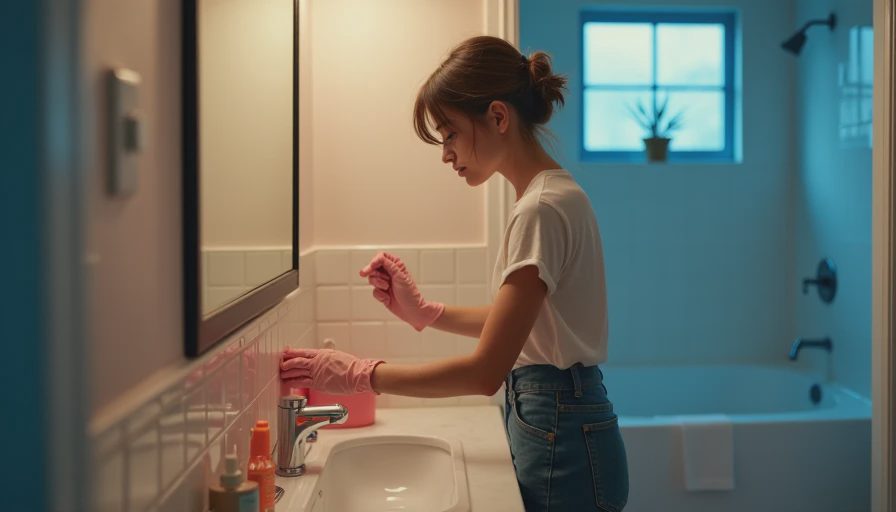
A big part of how to clean bathroom areas is controlling moisture. Remove hair from the drain, rinse loose debris, and spray the walls from top to bottom. Let the cleaner dwell before scrubbing. The dwell time does more work than frantic rubbing. Use the non-scratch side of a sponge on glazed tile and a soft brush in grout lines.
For hard-water spots, white vinegar can help on some glass and ceramic surfaces, but it should not be used on marble, limestone, or other acid-sensitive stone. Never combine it with bleach. Our shower door improved noticeably after I used a squeegee after each shower, which takes less than a minute and reduced the weekly scrubbing session.
Pay attention to caulk. Black staining that sits inside or beneath caulk may indicate mold or moisture behind the seal, not ordinary surface dirt. Cleaning may lighten it, but replacing damaged caulk is often the lasting fix. If the wall feels soft or the staining keeps returning, that is a repair issue rather than a cleaning issue.
Finish with the floor and laundry
The final stage in how to clean bathroom floors is vacuuming or sweeping before mopping. Hair turns into a wet, unpleasant mat if you skip that step. Use a floor cleaner suited to the material, and do not flood laminate, wood-look flooring, or areas around the toilet base. A damp microfiber mop is usually enough for routine cleaning.
Wash bath mats and towels regularly, following their care labels. Let the mats dry completely before placing them back down. Damp fabric can create odor and encourage mildew, especially in a bathroom with weak ventilation. Empty the trash, wipe the door handle and light switch, and leave the exhaust fan running for a while after cleaning.
For our household, the weekly routine costs very little because most supplies last for months. The bigger savings come from preventing buildup. A 60-second daily wipe of the faucet and a quick squeegee after showers keeps Saturday's job manageable. I still do a deeper clean every week, but it no longer feels like a bathroom renovation project.
A simple schedule that actually works
If you are learning how to clean bathroom spaces consistently, divide the work by frequency. Daily, wipe the sink area, hang towels so they can dry, and remove visible hair. Once or twice a week, clean the toilet, mirror, counter, tub, shower, and floor. Monthly, wash the exhaust fan cover, scrub grout trouble spots, clean the shower curtain or liner, and inspect caulk around the tub.
This order prevents the most common rework: dirty water landing on clean floors, dust settling on freshly wiped counters, and toilet germs spreading through the rest of the room. It also keeps the job realistic for a busy family. I put the timer on for 35 minutes, work top to bottom, and stop when the checklist is done rather than chasing perfect results.
The best lesson from how to clean bathroom surfaces is that consistency beats intensity. You do not need an expensive steam machine or twelve scented products. You need safe cleaners, separate cloths, good ventilation, and a repeatable sequence. Measure twice, cook once—and in the bathroom, clean once in the right order.