
The Question That Starts Every Conversation
“Is it worth it?”
Every homeowner who has ever stood in a dated kitchen, calculator open, has asked some version of this question. Friends asked us before we started. Readers ask it in emails now. We asked it ourselves at 10:47 p.m. on the night the first contractor bid arrived at $68,000.
This is the most honest answer I can give after living the full cycle: the decision, the dust, the overruns, the temporary kitchen, the finished room, and six months of actual use.
What “Worth It” Actually Means
Worth it is not a single number. It is a comparison between what you paid (money, time, stress) and what you received (function, daily experience, long-term value, and the absence of regret). Different families weight those factors differently. Here is how the equation resolved for us.
The Money Side
We spent $41,400.
The lowest contractor bid was $62,000 (appliances not included).
A realistic mid-range professional job in our area would have landed between $65,000 and $80,000 once change orders appeared.
We finished more than $20,000 below the lowest professional path. That gap funded a year of activities for the kids and left our emergency savings untouched. On pure cash-out-the-door math, the DIY route was clearly cheaper.
It was not free. Our labor (roughly 180–200 hours combined) had a real opportunity cost. Evenings and weekends disappeared for ten weeks. That cost does not appear in the spreadsheet, but it is part of the true price.
The Daily Experience Side
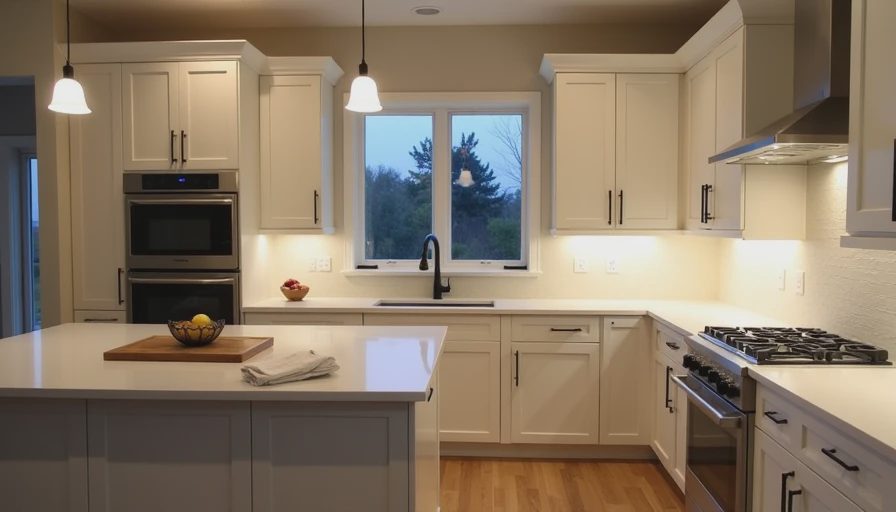
Six months in, the kitchen simply works better than the old one in every way that matters to us:
Soft-close drawers and doors instead of sticky, slamming ones
Lighting that does not buzz and actually lets us see what we are cooking
Counters that wipe clean and do not permanently record every hot-pan mistake
A floor that survives dog nails, spilled sauce, and kids without looking destroyed
Storage that opens where we expect it to and does not require a chair or a prayer
The room no longer creates friction. That absence of daily friction is worth more than we expected when we were only looking at material samples.
The Stress and Chaos Side
Ten weeks of temporary kitchen life, dust control failures, a six-week cabinet delay, an asbestos surprise, and a plumber who stopped the job were not abstract line items. They were real evenings of Instant Pot chili, real arguments about hinge direction, and real moments of wondering whether we had made a mistake.
If your household cannot absorb that level of disruption—small children with rigid routines, remote work that needs quiet, limited physical stamina, or zero tolerance for prolonged mess—then the DIY path is not worth it, regardless of the money saved. We could absorb it. Many families cannot. That is not a moral judgment; it is a practical filter.
The Knowledge and Confidence Side
We now know how our house is put together in a way we never would have learned by writing a check. We know where the plumbing runs, what the subfloor looks like, and how much patience cabinet hardware can consume. That knowledge has already paid off in smaller subsequent projects and in the ability to talk to tradespeople without feeling completely at their mercy.
For some people that education is valuable. For others it is irrelevant. Decide which camp you are in before you swing the first sledgehammer.
The Resale and Longevity Side
A functional mid-range kitchen in a 1994 suburban house is not a luxury listing feature. It is table stakes for the next buyer. We did not renovate to maximize resale; we renovated to live better in the house we already own. Still, the work is durable, code-correct, and documented. When we eventually sell, we will not be explaining aluminum wiring, asbestos tile, or a half-finished plumbing patch. That quiet reduction in future friction has value.
The Honest Verdict for Us

Yes. It was worth it.
Not because the process was fun (parts of it were miserable).
Not because we finished under the original estimate (we did not).
Not because the after photos look perfect (they do not).
It was worth it because the finished kitchen removes daily friction, because the cash cost stayed well below professional alternatives, and because we can stand in the room and know exactly what went into it. The public spreadsheet, the dust, the delays, and the Instant Pot phase were the price of that knowledge and that result.
The Filter I Now Give Friends
When friends ask the same question, I give them this filter:
Can your budget absorb a 10–15 % overrun without touching emergency savings?
Can your household function for 8–12 weeks with a severely limited kitchen?
Are you willing to document every dollar and every mistake in public (or at least in private) so the project stays honest?
Do you actually dislike the current kitchen enough that the daily friction bothers you more than the temporary chaos will?
If the answer to all four is yes, the DIY mid-budget path can be worth it. If any answer is no, write the check to a reputable contractor or live with the almond cabinets a little longer.
One Final Note from the Finished Counter
I still open a drawer sometimes just to hear the soft close. Megan still turns the under-cabinet lights on the moment it gets dark. The kids no longer ask when the “real kitchen” is coming back. The dog has claimed the same spot he always claimed, only now the floor is easier to clean.
The spreadsheet is closed at $41,400.
The temporary kitchen is gone.
The question “is it worth it?” has an answer for us.
Measure twice, cook once.
And only start if the honest answer is already yes.