
If you are looking for a budget kitchen renovation story, ours started with almond cabinets, a tired laminate counter, and a spreadsheet I updated like a product roadmap. We were not trying to build a magazine kitchen. We wanted a room that cooked better, cleaned easier, and did not chew through our savings. The internet makes a budget kitchen renovation sound neat and predictable. Real life is a lot more like choosing which annoyances are worth paying to fix and which ones can live another year.
Start with the room you already have
The first thing I learned is that layout changes are where budgets go to get humble. If you keep the sink, range, and fridge in roughly the same places, you avoid a lot of plumbing, electrical, and drywall work. The minute you move water or gas across the room, the price climbs fast. In our case, keeping the footprint saved us thousands and kept the project moving. We still had plenty to do, but we were not opening walls just to move a dishwasher six feet.
I think of it this way: a cosmetic refresh is one lane, a mid-range remodel is another, and a full gut is its own sport. For a 180-square-foot kitchen like ours, the difference between those lanes can be $10,000 to $30,000 or more. That is why the first real decision was not tile or paint. It was scope. Once we decided the bones were staying, everything else got easier to price.
The line items that quietly eat the budget
In our budget kitchen renovation, cabinetry was the biggest decision because it sets the floor for everything else. We priced IKEA cabinets, Home Depot stock options, and semi-custom lines like KraftMaid and Fabuwood before choosing the path that gave us the best mix of price and finish. By the time we added fillers, panels, delivery, and install help, the cabinet number was still the biggest chunk of the project. That is normal. Cabinets are not just boxes; they are the thing you stare at every day.
Our actual total came in at $27,480. The rough breakdown looked like this: cabinets and hardware, about $8,400; quartz counters and install, about $4,900; appliances, about $5,300; electrician and plumbing tweaks, about $3,700; backsplash tile and grout, about $1,300; paint, trim, and supplies, about $950; flooring repair and transitions, about $1,150; and the rest in odds and ends, tax, and delivery fees. No single line looked scary by itself. Together, they added up faster than I wanted.
The sneaky stuff matters too. A decent faucet from Moen or Delta can run a few hundred dollars. Pulls add up once you buy 25 or 30 of them. Under-cabinet lighting, outlet upgrades, and the extra bag of thinset you forgot to price are all small on paper and annoying in aggregate. A budget kitchen renovation gets blown up more often by a dozen medium purchases than by one giant mistake.

What we cut, what we kept
The best part of a budget kitchen renovation is that the room starts to look better fast once the paint and hardware go in. We kept the layout, kept the existing fridge opening, and skipped the built-in extras that look great online but do not help anyone make dinner on a Tuesday. No pot filler. No giant apron-front sink. No cabinet-to-ceiling custom crown that would have eaten a week and a chunk of the budget. We did choose a quartz counter because we knew we would value low maintenance more than saving a few hundred dollars on laminate.
We also resisted the urge to replace anything that still worked well. The dishwasher stayed because it was quiet and reliable. The range stayed because it had enough burners for family cooking. We spent money where hands and eyes notice it every day: cabinet fronts, wall color, backsplash, and lighting. Sherwin-Williams paint gave the room a cleaner look for less than the price of a small appliance, and new pulls made the old boxes feel less dated than I expected.
That is the part I wish more remodel content said plainly. A budget kitchen renovation is not about making every choice cheap. It is about making a few expensive choices on purpose and skipping the ones that only sound essential when you are standing in a showroom.
The messy middle is where the calendar blows up
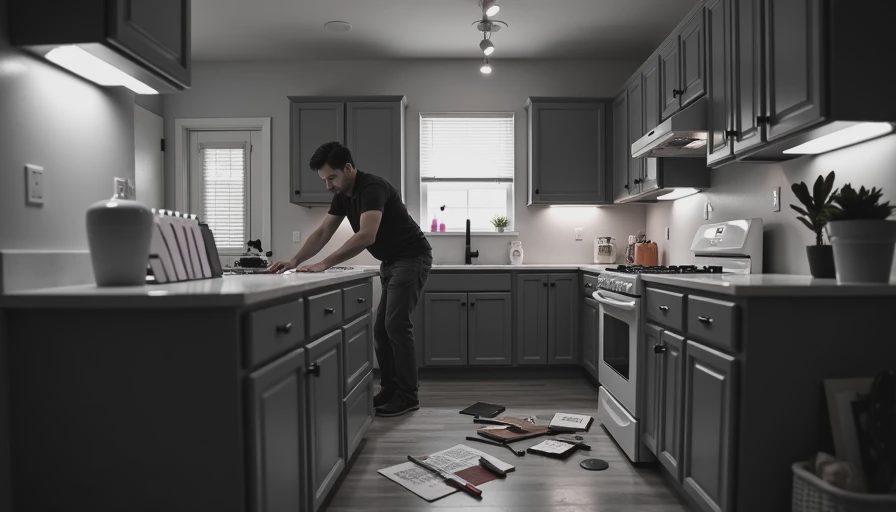
In week two of our budget kitchen renovation, the room looked worse before it looked better, which is apparently the exact emotional weather forecast for remodeling. Demo was a long weekend. Then came patching, sanding, cabinet assembly, a missing filler piece, and one awkward afternoon when the electrician and countertop templating needed the same corner of the room. If you are trying to cook through that, you are either very patient or very hungry.
We set up a camp kitchen in the dining room with a microwave, toaster oven, cutting board, and a cheap electric kettle. Breakfast was fine. Dinner was where it got old. Takeout ran about $70 to $100 on the nights we gave up, which is one reason the spreadsheet included a temporary food line. That number mattered more than I expected. A remodel does not just cost money for materials. It changes how a family eats, where dishes pile up, and how much patience everyone has left by 7 p.m.
The timeline also taught me to expect one dumb delay for every three smart decisions. A backordered part, a wrong measurement, a cabinet door that arrives with the wrong hinge bore hole, all of it can stall a project that looked perfectly planned on Sunday night. That is why I would rather leave a little money in the contingency bucket than spend every dollar on the first quote.
Ask the boring questions before you buy
For a budget kitchen renovation, I would rather buy a better faucet and better task lighting than chase a luxury range that changes nothing about how dinner gets made. That sounds unglamorous because it is, but the boring stuff is what you notice when the novelty wears off. Ask yourself whether the current layout works, whether the cabinet boxes are worth saving, and whether the countertop is truly the problem or just the thing you are tired of seeing.
If your cabinets are solid and your doors are not warped, paint can buy you time. If the boxes are failing, replacing them is probably smarter than sinking money into cosmetics. If your flooring runs under the cabinets and is already damaged, fixing that before the new cabinets go in will save future headaches. These are not exciting decisions, but they are the ones that keep the project from drifting into the kind of spending that makes a family look at the final invoice and laugh in a very tired way.
What I would tell a friend on day one
Start with a real number, not a wish. Ours was under $30,000, and that meant every choice had to earn its place. Get at least three quotes for cabinets or install work, keep a 10% to 15% contingency, and write down every small purchase the day you make it. Measure twice, cook once. That line lives on our counter notebook for a reason.
If you are early in the process, do not begin with tile samples or fancy range photos. Begin with scope, then appliances, then cabinets, then counters, then the visible details. That order kept us from buying pretty things before we understood the real cost of the room. A spreadsheet will not make demolition fun, but it will keep a small problem from becoming a kitchen you cannot afford to finish.