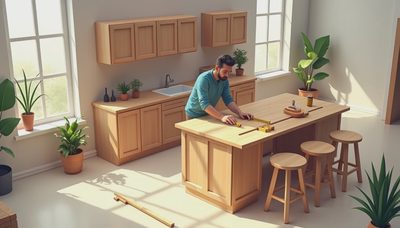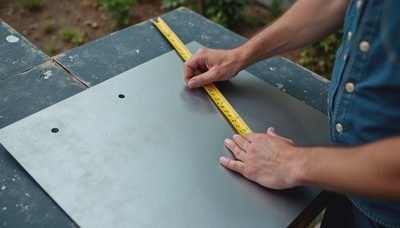
I went into diy kitchen cabinets thinking the big win would be obvious: skip the labor line, save a pile of money, and keep the whole thing moving on my own schedule. That part was true, but only after I stopped pretending the cabinet boxes were the whole story. The real price showed up in plywood, hinges, filler strips, paint, extra clamps, and the two Saturday afternoons I burned fixing mistakes I could have avoided with one more measurement. If you are looking at a mid-budget kitchen and wondering whether the DIY route is a smart move, this is the version with the receipts.
What DIY kitchen cabinets actually cost in the real world
The first time I priced diy kitchen cabinets, I made the classic spreadsheet mistake: I compared the cost of raw boxes to one contractor quote and called it a win. That is not how it works. For a normal suburban kitchen, a painted refresh can land around $700 to $1,800 if the boxes are solid and you are mostly buying primer, paint, new hardware, and a few repair materials. A partial rebuild with new doors and drawer fronts often runs $1,500 to $3,500. A full replacement with stock or semi-custom parts can sit anywhere from $4,500 to $11,000 before countertops.
Our Salt Lake City project landed near the middle. We spent about $6,900 on cabinet parts, hardware, trim, paint, and the tools I did not already own. A local quote for the same footprint came in a little over $13,000 before counters, so the gap was real. Still, if I had ignored small stuff like shims, cabinet screws, and a second can of enamel, the budget would have blown up fast. Measure twice, cook once.
Why DIY kitchen cabinets worked for our 1994 Salt Lake City kitchen
Our kitchen was a good candidate because the layout was simple, the room was only about 180 square feet, and the old cabinets were beyond the point where a quick facelift made sense. The boxes were swollen in places, the drawer slides were sticky, and one lower run had a sag that made the whole wall feel tired. For us, diy kitchen cabinets meant getting a clean start without paying for a full custom build.
I chose IKEA SEKTION for the main boxes because the system is straightforward, parts are easy to replace, and the prices stay sane if you keep the design simple. I am not saying it is the only answer. I am saying it fit a family budget and a project schedule that had to survive school, work, and regular dinners. The downside is that you still need to think like a cabinet installer. The box is not the project. The fit is the project.
Tools, materials, and the hidden costs that sneak in
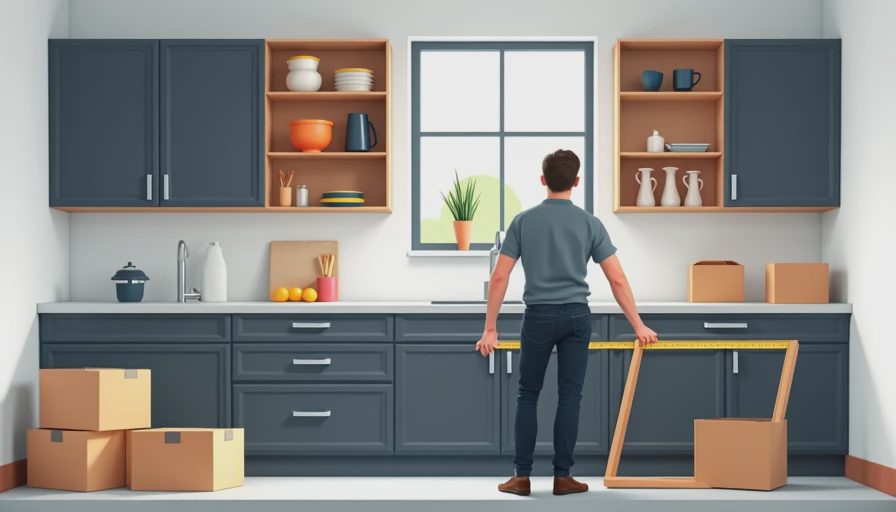
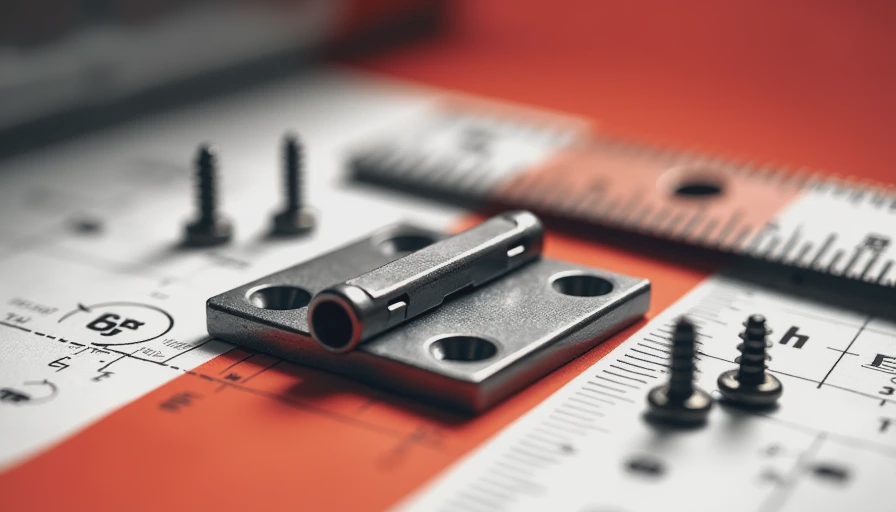
This is where diy kitchen cabinets starts acting less like a weekend project and more like a small construction job. I already owned a circular saw, drill, level, and sander. I still had to buy a Kreg pocket-hole jig, better clamps, cabinet screws, shims, a laser level, and a good scribe tool. None of those items felt dramatic on their own. Together they added a few hundred dollars before I had even hung a cabinet.
The materials list was just as sneaky. We needed primer, cabinet enamel, painter’s tape, filler strips, wood filler, construction adhesive, touch-up caulk, and new pulls. I also bought one extra sheet of plywood after realizing my first cut list assumed walls that were more square than they really were. They were not. Old houses love that joke. If you are budgeting diy kitchen cabinets, build in a buffer for waste, because your first plan will not survive the first crooked wall.
The mistakes that burned time and cash
My biggest mistake was thinking I could muscle through alignment later. That is how you end up with a toe-kick gap you cannot unsee and a door reveal that looks fine from ten feet away but drives you crazy every time you make coffee. One wall in our kitchen bowed enough that I had to split the difference with filler strips on both ends of the run. That looked minor on paper and annoying in real life.
The second mistake was rushing the finish work. I painted one cabinet door too early, handled it too soon, and left a fingerprint in the enamel that I had to sand and repaint. That cost me a day because cabinet paint is unforgiving when you treat it like wall paint. The third mistake was not dry-fitting every opening with the appliances in place. Our dishwasher and fridge both needed a little more breathing room than the drawing suggested. None of this was catastrophic, but it turned a clean plan into a slower, messier one.
How I installed and aligned everything without losing my mind
If you are starting diy kitchen cabinets, do the unglamorous work first. I marked appliance clearances, snapped level lines, and found the highest point in the floor before I touched a drill. Then I set the corner cabinet, leveled it carefully, and used that as the anchor for the rest of the run. From there, every other box had to follow the line, not the room. That one choice saved me from stacking small errors all the way across the wall.
I also learned that the order matters more than the tool brand. Get the bases right, then the uppers, then the fillers, then the doors, and only then the final paint touch-ups. If you try to perfect the trim before the boxes are set, you will redo the same corner three times. On our project, the install took longer than expected, but it moved faster once I stopped improvising and started following the same sequence every time. The spreadsheet stayed open on the counter the whole week.
When DIY kitchen cabinets stop making sense
There are a few situations where diy kitchen cabinets is the wrong bet. If your timeline is tight, if the layout is full of odd angles, or if you want a high-end painted finish without sanding and waiting between coats, paying a pro can be the better deal. The labor savings disappear fast when the job needs custom panels, complex crown molding, or a pile of specialty corner solutions. At that point, you are not really saving time; you are buying yourself a second job.
For a straightforward kitchen, though, the DIY path can still be a solid middle ground. You keep control of the budget, you choose where to spend and where to simplify, and you learn exactly how your kitchen goes together. That matters when a hinge loosens or a filler strip needs a touch-up six months later. My honest read is simple: if you have a flexible schedule, some patience, and enough tolerance for dust, diy kitchen cabinets can be worth it. If you need the room done fast, get quotes and compare them against your weekends, not just your cash.