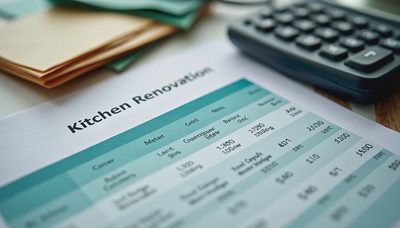
When I built our kitchen remodel budget estimator for our 1994 Salt Lake City kitchen, I thought I was being careful. I had cabinet quotes, appliance screenshots, and a Google Sheet that looked serious enough to survive a product review. The estimate landed at $24,000. Our final spend ended up closer to $30,500, and the difference was mostly the kind of stuff nobody puts on a mood board: electrical updates, plumbing surprises, trim pieces, and the dumb little errands that happen when a kitchen is torn apart and you still need to feed a family.
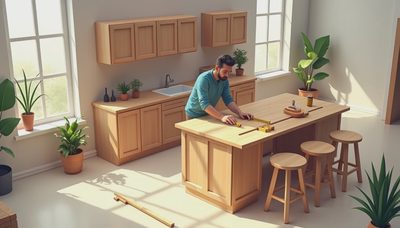
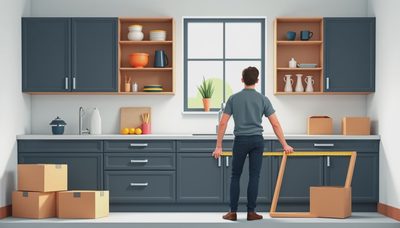
We were not doing a luxury gut job. The layout stayed the same, the footprint stayed about 180 square feet, and we did a lot of the demo and paint ourselves. That matters, because a budget tool only works if it knows what you are keeping and what you are changing. A budget tool is most useful when you are keeping the same layout and shopping in the middle of the market, not when you are moving walls and ordering custom everything. Measure twice, cook once. If you are trying to use the numbers to decide whether to remodel now or wait another year, you need the boring version, not the glossy one.
What the kitchen remodel budget estimator got right
The best part of the estimate was that it handled the big-ticket items in the right neighborhood. Cabinets were the biggest line, and the spreadsheet knew that before I did. We spent $11,400 on stock cabinet boxes, filler pieces, and installation. I had guessed that number would be lower because cabinets sound like something you can bargain down with enough confidence. You cannot. Once you pick a material, a finish, and any odd-width panels, the dollars show up fast.
Countertops and appliances were also close enough to trust. We paid $4,250 for quartz fabrication and install, and about $6,900 for a range, dishwasher, microwave, and fridge replacement. I had feared appliances would explode the budget, but staying with standard sizes and a normal finish helped. The estimate was useful because it forced us to make decisions early, while the project was still a spreadsheet instead of a pile of boxes in the garage.
Once I saw the total climb, I stopped pretending we needed every upgrade. That meant one backsplash instead of a fancy accent wall, no pot filler, and a simple sink upgrade instead of a full plumbing redesign. The number on the page did what a good spreadsheet should do: it made the tradeoffs visible before I was standing in the aisle at Lowe's with a half-full cart and bad judgment.
Where the estimate was too optimistic
The kitchen remodel budget estimator was low on electrical, and that is where a lot of homeowners get surprised. We had old wiring that looked fine until the walls were open, plus a couple of code-related fixes that nobody mentioned in the first quote. Electrical came in at $1,950, which was not catastrophic, but it was higher than the estimate and it pushed back the timeline by two days. Same story with plumbing. We spent $1,420 after the sink base changed and the shutoff valves needed replacement.
The other miss was all the small stuff that adds up to real money. We spent about $780 on paint, patching, caulk, screws, and touch-up materials. Then there was the dumpster, a short-term fridge rental while our old one died, and two extra Home Depot runs for trim and connectors. None of those costs feel dramatic on their own, but together they swallowed almost the entire gap between the estimate and the final total. The remodel did not blow up because of one giant mistake. It drifted because of twenty normal ones.

If I had to name the biggest planning mistake, it was assuming the project would finish in a straight line. It did not. A delay in the cabinet delivery pushed the countertop date, which pushed the plumber, which meant another week of eating on folding chairs. That delay had a cost even before you count the morale damage. If you are comparing quotes, ask how long materials are taking now, whether the installer has a backlog, and whether the price includes haul-away. The quote that looks cheapest on paper can be the one that creates the most expensive schedule.
Our actual spend, item by item
Our final number for the kitchen was about $30,500, and that was with us doing demo, painting, and most of the cleanup ourselves. The breakdown was not glamorous, but it was honest. Cabinets and installation were the biggest piece at $11,400. Quartz was $4,250. Appliances were $6,900. Electrical and plumbing together were $3,370. Flooring came to $2,300 after we replaced the old vinyl with a durable option that could survive kids, dogs, and one dropped cast-iron skillet. The rest was drywall repair, paint, fixtures, hardware, and the parade of receipts nobody remembers later.
One reason that total stayed in the low-thirties instead of jumping higher was that we kept the layout. Moving the sink or stove would have meant more plumbing, more electrical, and likely more labor. We also chose stock cabinet sizes instead of a fully custom build, and that saved both time and stress. I am not saying stock cabinets are magical. I am saying they are a very good answer when you want your kitchen to look better, work better, and not turn into a six-month hobby.
Where we saved without wrecking the kitchen
We saved money in places that would not matter to us every day. The cabinet interiors are simple. The backsplash is clean, not ornate. The faucet is a standard Delta model, not one of those giant coil sprayers that looks like it belongs in a restaurant. Those choices made the space feel finished without forcing us into the top shelf of every category. A mid-budget remodel gets into trouble when every room wants a hero piece. You only need a few.
We also saved by doing the work in the right order. Demo came first, then electrical, then plumbing, then cabinets, then counters, then tile and finish work. That sounds obvious until a family is living through the mess and wants the fastest visible win. I wanted to install the pretty stuff first. That would have been a disaster. The spreadsheet kept me from making expensive emotional decisions, which is more useful than it sounds when you are staring at a bare subfloor and wondering why you started this in the first place.
How to use a kitchen remodel budget estimator without fooling yourself
If you are building your own estimate, start with three numbers, not one. First, price the version of the kitchen you can actually live with. Second, price the version you secretly want. Third, add a cushion of at least 15 percent for the stuff you forgot, the stuff that breaks, and the stuff you decide to upgrade once the walls are open. That cushion is not pessimism. It is how you keep the project from making every dinner feel like a financial emergency.
The other trick is to separate materials from labor before you get emotionally attached to a finish. A pretty tile can cost $8 a square foot or $28 a square foot, but installation can matter just as much as the material. The same goes for cabinets, where the box price is only part of the story. Delivery, installation, trim, and little adjustments are where budgets go to die. If the spreadsheet only tracks the shiny part, it is lying to you.
Ask Jesse: what I would do differently next time
If I redid this kitchen tomorrow, I would still keep the layout, still buy in the middle of the market, and still skip the big decorative splurges. I would also set aside another $3,000 before the first cabinet arrived. Not because I love wasting money, but because the project felt calm only after the cushion was real. That extra buffer would have covered the surprise fixes without forcing us to pause and debate every small decision.
So if you are looking at your own kitchen and wondering whether the numbers are fantasy or reality, my answer is simple: build the estimate, then stress-test it against actual quotes from cabinets, counters, electrical, plumbing, and appliances. If the final total is within a few thousand dollars of what you expected, you are probably in the right zone for a mid-budget remodel. If it is off by a mile, the spreadsheet just saved you from a very expensive surprise.