Welcome to the Kitchen That Started It All
Before the dumpster, before the spreadsheet hit $38,000, before the first Instant Pot meal on a folding table, there was this room.
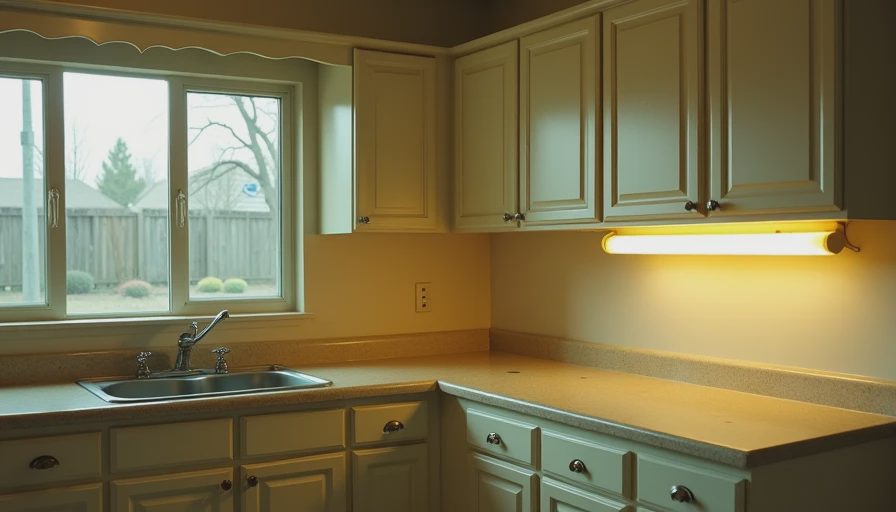
One hundred eighty square feet of pure 1994 suburban kitchen. Almond-colored everything. Fluorescent lights that hummed like they were still waiting for the Y2K bug. A laminate countertop with a mysterious burn mark neither Megan nor I will claim. This is the before tour—the honest, slightly embarrassing walk-through of the space we lived in for years and finally decided to gut.
I took these notes standing in the middle of the room with the renovation notebook open, phone camera ready, and the kids asking why Daddy was talking to the cabinets again.
The Layout That Made Sense in 1994
The kitchen sits at the back of the house, open to a small eating nook on one side and a hallway to the living room on the other. Galley-ish but with a peninsula that was probably marketed as “perfect for entertaining” in the original brochure.
Sink centered under a single window that looks out onto the backyard fence and a patch of lawn the dog has claimed.
Range on the opposite wall, so you could theoretically cook and wash dishes without turning around much.
Refrigerator tucked into a corner that forces you to open the door into the main walkway.
Peninsula with two bar stools that have never been comfortable for anyone over the age of twelve.
On paper it is fine. In real life, two adults and two kids trying to make breakfast creates a traffic jam that would make a product manager redesign the user flow immediately.
The Almond Cabinets
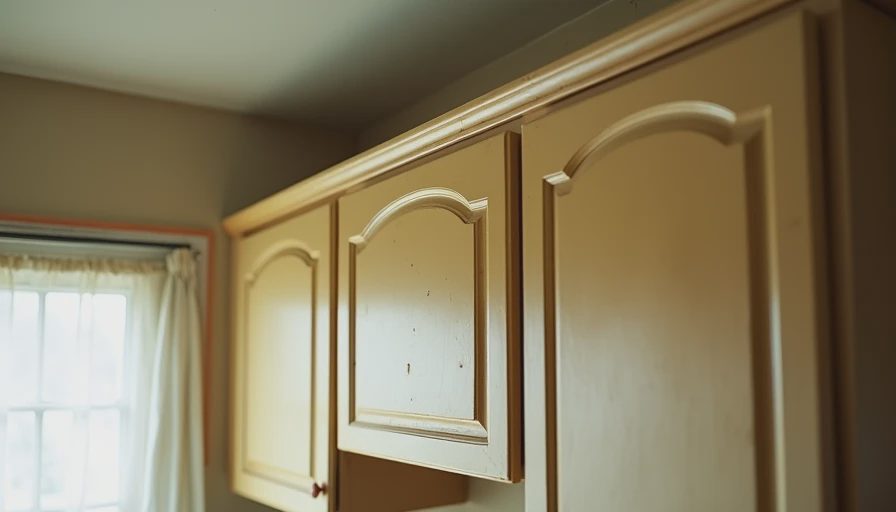
They are the color of expired vanilla pudding. Or maybe the inside of a manila folder that has seen better decades. Original raised-panel doors, some of the soft-close mechanisms long dead, so several of them close with a soft clack that announces every late-night snack run.
The upper cabinets stop about a foot short of the ceiling, leaving that classic 90s soffit we will eventually tear out and regret for at least one full afternoon. Inside, the shelves are particleboard that has started to soften near the sink. The lower cabinets have that particular sticky feel that only thirty years of cooking spray and kid fingerprints can create.
We kept them functional with temporary fixes: felt pads on the doors, a tension rod for extra storage, and the quiet agreement that we would not look too closely at the corners.
Lighting That Feels Like a Dentist’s Office
Two long fluorescent tubes in a plastic diffuser that has yellowed just enough to make every meal look slightly jaundiced. They buzz. Not loudly, but consistently, like a refrigerator that is thinking about giving up.
There is one switch for the whole room. No under-cabinet lighting. No pendant over the peninsula. When the sun goes down, the kitchen becomes a flat, slightly greenish box. Cooking after dark feels like performing surgery under hospital lights.
We tried warm-toned bulbs once. The fixture rejected them with a flicker that felt personal.
The Countertops and the Mystery Burn
Beige laminate with a subtle speckled pattern that was probably called “Desert Sand” or something equally optimistic in the 1994 catalog. The seams are still mostly intact. The edge banding has peeled in two places near the sink.
And then there is the burn mark. Roughly the size of a small plate, dark brown, located exactly where a hot pan would rest if someone set it down too quickly while talking on the phone. Megan swears it was there when we bought the house. I have a vague memory of a cast-iron skillet and a distracted Tuesday in 2019. The truth is lost to history. The mark remains, a permanent reminder that this surface was never meant to last forever.
The Floor That Has Seen Things
Original vinyl sheet goods in a pattern that tries to look like stone and fails in a gentle, dated way. It is soft underfoot, which the kids love and the dog uses as a personal runway for shedding. Near the sink there is a slight soft spot that makes us both step carefully. We had it tested. No asbestos. Just thirty years of slow water persuasion.
The Small Details That Finally Broke Us
It was never one dramatic failure. It was the accumulation.
The drawer that sticks every single time you try to open it with one hand while holding a cutting board. The cabinet above the fridge that requires a chair and a prayer. The way the peninsula lights up with every crumb because the laminate has lost whatever stain-resistant coating it once claimed. The fluorescent hum that becomes noticeable the moment the house is quiet.
One Saturday morning Megan was making pancakes and the disposal made a sound like it was chewing gravel. We looked at each other over the almond cabinets and the burn mark and the buzzing lights, and the conversation shifted from “someday” to “we should probably start a spreadsheet.”
Why We Photographed Everything
I walked through with the phone and the notebook because I knew the after photos would be tempting to post alone. The clean quartz, the soft-close doors, the under-cabinet lights that actually make the space feel usable after dark. Those photos are easy. The before photos are the ones that keep the project honest.
This room fed us for years. It hosted birthday cakes, late-night cereal, the first attempts at homebrew tasting, and more than one family meeting about whether we could afford soccer and ski passes in the same season. It is not a villain. It is simply finished.
The Dream That Sits on the Other Side
We are not chasing a magazine kitchen. We want a space that can handle two kids, one shedding dog, weeknight pasta, and the occasional Sunday baking project without making us negotiate traffic flow. Soft-close drawers. Lighting that does not buzz. Counters that do not permanently record every hot-pan mistake. A layout that still makes sense when four people are trying to move at once.
The $38,000 estimate exists because of this room. The dumpster reservation exists because of this room. The public spreadsheet exists so that anyone standing in their own dated kitchen can see the real distance between “before” and “after.”
Next weekend the almond doors come off. The fluorescent tubes get one final buzz. The burn mark becomes landfill.
Measure twice, cook once.
And take the before photos while you still can.