
Why a Product Manager Decided to Demolish His Own Kitchen
I am not a contractor.
I am not a designer.
I am definitely not the guy on YouTube who flips houses in three weeks while drinking cold brew and never missing a measurement.
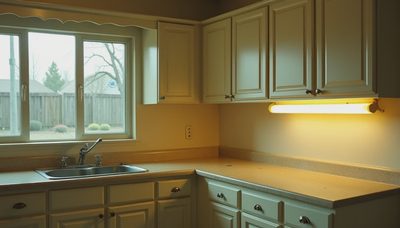
I am Jesse Holt. I live in a 1994 suburban house in Salt Lake City with my wife Megan, our two kids, a dog who sheds like it’s a competitive sport, and an original almond-colored kitchen that has been quietly judging us since the day we moved in. The cabinets are the color of expired vanilla pudding. The fluorescent lights buzz like a dentist’s office. The laminate countertops have a mysterious burn mark that neither of us will claim.
So of course we decided to renovate it ourselves.
This is the manifesto. The “why the hell are we doing this” post. The one I wish every homeowner would write (and then re-read at 11 p.m. when the drywall dust is in their coffee) before they swing the first sledgehammer.
The Real Reasons We Said Yes

1. The budget was real, and the quotes were not
We started the normal way. We called three local contractors. The lowest bid came back at $68,000 for a 180-square-foot kitchen. That number did not include appliances. It also did not include the moment the plumber would discover that the original 1994 drain line was held together by hope and duct tape.
Sixty-eight thousand dollars is a new car. It is almost a year of private school for both kids. It is the kind of number that makes a product manager open a blank Google Sheet at 10:47 p.m. and start typing “Phase 1 – Demolition” just to feel like he still has control.
We ran the numbers three different ways. Even with a 20 % contingency, doing the majority of the work ourselves dropped the projected total to around $38,000. That gap was the first real reason.
2. I treat everything like a product launch
I cannot help it. Twenty years of product work rewires your brain. Roadmaps, sprints, retros, acceptance criteria. When Megan and I sat at the kitchen table with a legal pad and a bottle of cheap red wine, I automatically started drawing swim lanes.
Sprint 0: Research & Budget
Sprint 1: Demo & Rough-ins
Sprint 2: Cabinets & Counters
Sprint 3: Finishes & Punch List
It felt familiar. Dangerous, but familiar. The same part of my brain that once argued about button hierarchy on a SaaS dashboard was now arguing about whether we should keep the sink under the window or move it three feet to the left for better traffic flow.
3. We wanted the messy middle on the record
Most kitchen content falls into two camps:
A) Perfect Instagram afters with no receipts.
B) Horror stories that end with “and then we sold the house.”
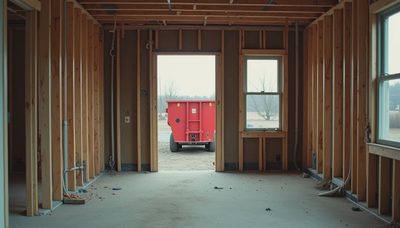
Almost nobody shows the middle. The part where the vinyl floor comes up and you find 1996 mouse traps still set. The part where the cabinet order is six weeks late and two doors are the wrong hinge side. The part where you cook Instant Pot chili on a folding table in the garage in January because the temporary kitchen is a camp stove and a prayer.
We decided early that if we were going to do this, we would document every dollar, every delay, and every dumb decision. Public Google Sheet. Real receipts. No affiliate links for tools we didn’t actually buy. That decision is the spine of this entire site.
The Reasons It’s Probably a Bad Idea
Let me be equally clear about the downside, because pretending this is romantic is how people end up living with plywood counters for eighteen months.
Time is not free
I have a full-time job. Megan teaches elementary school. The kids have soccer, piano, and an impressive ability to track drywall dust into every room of the house. Every hour I spend on the kitchen is an hour I am not trail running in the Wasatch foothills or brewing the next batch of IPA in the garage. We budgeted ten weeks of active chaos. I already suspect that number is optimistic.
Skill gaps are expensive
I learned every construction skill the same way most of us do: YouTube at 1.5x speed, a contractor buddy named Dave who answers texts at weird hours, and trial-and-error in a space that used to produce family dinners. That method works until it doesn’t. The first time you cut a tile too short or realize the RTA cabinets you ordered have a 1/8-inch tolerance problem, the spreadsheet starts glowing red.
Decision fatigue is real
Picking cabinet hardware should not take longer than demolition. Yet it did. There is a special kind of exhaustion that comes from standing in a big-box store aisle for the fourth time, holding two almost-identical pulls, while your brain whispers “this is why people just hire designers.”
The house still has to function
We have two kids and a dog. We cannot simply “live somewhere else” for three months. The temporary kitchen is a camp stove, an Instant Pot, a folding table, and a lot of paper plates. That setup works until the first real Utah snowstorm and someone asks for pancakes.
What “Doing It Ourselves” Actually Means
We are not framing walls or moving plumbing stacks. We hired licensed pros for electrical, plumbing, and the final countertop templating. Everything else — demolition, cabinet installation, tile, flooring, paint, hardware — is on us, with Dave on speed dial and a growing collection of tool-store receipts.
The public Google Sheet is already live. Every expense will be logged by category, phase, and date. No theoretical estimates. If a box of screws costs $4.87 including tax, it goes in the sheet. That transparency is the only way this project stays honest.
The Signature Rule We Keep Repeating
Measure twice, cook once.
It started as a dumb joke in the renovation notebook that lives permanently on the kitchen counter. It stuck because it captures both halves of this project: the precision the work demands, and the fact that at the end of the day we still have to feed four humans and one shedding dog.
We will mess things up. We will go over budget in places we did not expect. We will probably discover something under the subfloor that makes us both sit down on the dusty floor and stare at each other for a full minute. When that happens, the sheet gets another line item and the blog gets another post.
This is not a highlight reel. It is a working journal from a mid-budget kitchen in a 1994 house in Salt Lake City, written by a product manager who should probably have known better and did it anyway.
If you are standing in your own dated kitchen right now, calculator open, wondering whether the DIY path is courage or temporary insanity — this series is for you. We will show the numbers, the dust, the meals cooked on a camp stove, and the exact moment the new countertops finally went in.
The almond cabinets come down next weekend.
The spreadsheet is already open.
Here we go.